

Is Gutter Repair in Saratoga Springs, NY Enough When Your Gutter Is Pulling Away From the House?
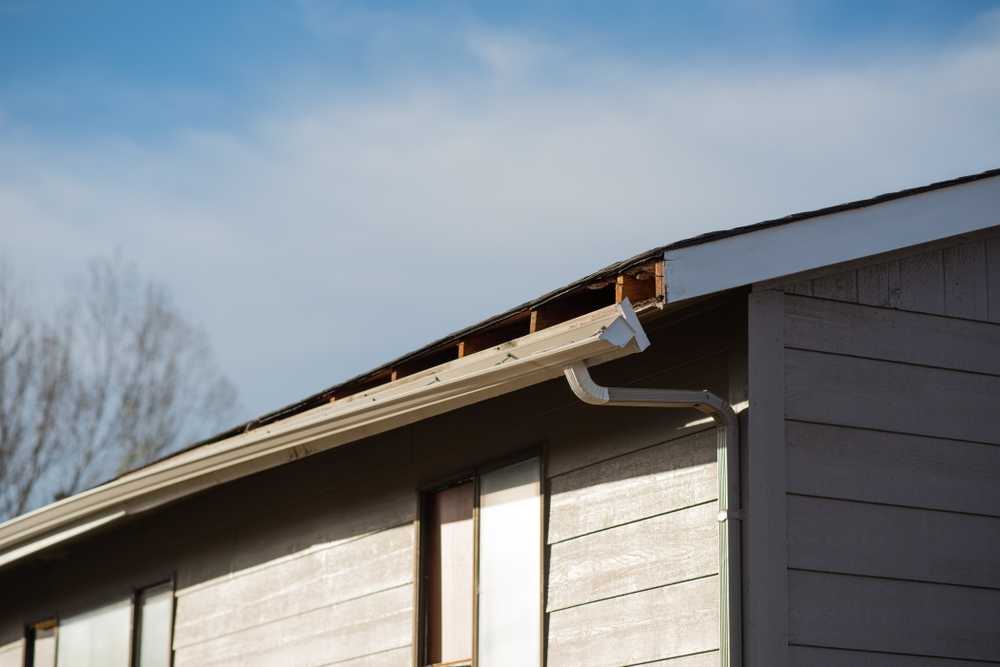
The situations described here are composites drawn from the types of jobs and decisions we encounter regularly. Names and specific figures are illustrative.
The house was a two-story colonial in Saratoga Springs, built in the mid-1990s, with about 165 feet of 5-inch seamless aluminum gutter and five downspouts. The 42-foot run across the front had dropped about an inch and a half away from the roof edge in the middle, and in an October rain water was spilling over the front lip onto the walk. From the driveway you could see daylight between the back of the gutter and the fascia. The homeowner called about gutter repair in Saratoga Springs, NY with one question: can this be fixed so it holds through the winter, or are the gutters done?
It’s one of the most common calls we get in the fall. A gutter that’s pulling away looks like a failed gutter, so people assume they’re pricing a full replacement. Sometimes they are. On this house, the answer came down to what was holding the gutter up, not the gutter itself.
What was actually holding the front gutter up
The front run was hung the way a lot of 1990s houses in the Capital Region were: long spikes driven through the face of the gutter, through a metal sleeve called a ferrule, and into the fascia board behind it. We counted 16 spikes on 42 feet, which works out to roughly one every 32 inches. Five of them had backed out partway. Two near the middle had backed out far enough that the gutter was resting on the heads, and the holes behind them in the wood were wallowed out wider than the spike.
The aluminum was in good shape. No cracks, no corrosion along the bottom, and the only leaks were at the two end caps, which is normal for a gutter this age and easy to reseal. The pitch was gone in the middle third of the run, though. When we ran a hose into the high end, water sat in a shallow pool where the gutter had dropped and only drained once it overflowed. That pool is what the homeowner had been watching spill onto the walk.
This Old House describes the same pattern: sagging gutters are often caused by loose fasteners or a deteriorating fascia board, and fixing them may mean replacing the old hangers and repairing rotted fascia before the gutter goes back up[1]. On this house it was both, just not in equal amounts.
The soft spot behind the downspout corner
Most of the fascia was solid. A screwdriver pushed against it every couple of feet stopped at the surface. The exception was a section about three feet long at the corner where the front run turned into the downspout. There the screwdriver sank in a quarter inch with light pressure, and the paint had a dark line along the bottom edge.
That corner had been getting wet for years. The end cap leaked a little in every rain, and the water ran down the back of the gutter onto the same strip of wood. Forest Service researchers note that wood decay fungi need a moisture content of at least 20 percent to keep growing[2]. A board that gets a slow drip every time it rains doesn’t dry out long enough to stay below that. The rest of the fascia, which stayed dry, was fine.
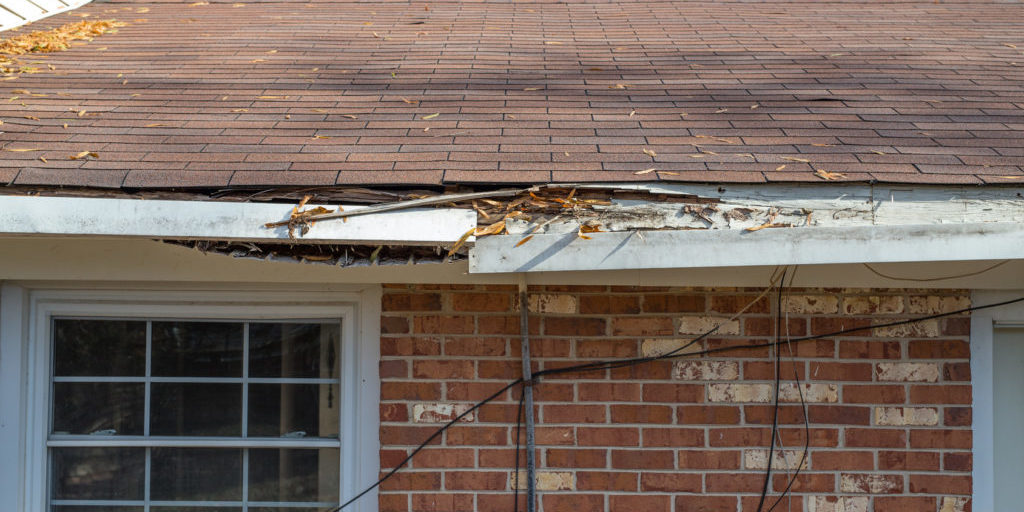
The house in the photo above is further along than this one was. Once the fascia is soft across a whole run, new hangers have nothing to bite into, and the repair conversation turns into a carpentry conversation first. Our post on fixing fascia rot before new gutters go up walks through that version of the job. Here, three feet of rot was something to cut out and replace, not a reason to start over.
Why the timing mattered more than the sag
A gutter that’s an inch and a half out of place in October is a nuisance. The same gutter in February is carrying weight it wasn’t built to carry with half its fasteners loose. The National Weather Service’s Albany record, the usual reference point for the Capital Region, shows a 1991–2020 normal of 59.2 inches of snow a season[3]. FEMA’s snow load guide puts one foot of fresh snow at anywhere from 3 pounds per square foot when it’s light and dry to 21 pounds per square foot when it’s wet and heavy, and one inch of ice at a little under 5 pounds per square foot[4].
A gutter with a low spot in the middle is the one that holds water, and the water in that low spot is what freezes first. So the section that was already failing would have been the section carrying the most ice. That’s why the homeowner’s instinct to deal with it before the snow was the right one, even if the fix turned out smaller than expected.
Three ways to handle it, and how they lined up
We laid out three options at the kitchen table. The figures for this house are illustrative, but the spread between them is typical.
| Option | What it involves | Rough cost on this house | What it leaves behind |
|---|---|---|---|
| Re-drive the old spikes | Tap the loose spikes back in, reseal end caps | About $150 | Same spikes in wallowed-out holes, soft corner still wet |
| Rehang the front run | Replace 3 ft of fascia, hidden hangers with screws, reset pitch, reseal end caps | About $560 | The other 123 ft stay as they are (checked, sound) |
| Replace all gutters | New 5-inch seamless on all 165 ft, new downspouts | $1,400–$2,800 range for a house this size | Nothing, but it replaces aluminum that still had years left |
For context, This Old House puts typical gutter repair between $75 and $625, with most homeowners paying around $350, and a full replacement around a house at $1,700 to $3,100[1]. The middle option on this house sat near the top of the repair range because it included fascia work.
Re-driving the spikes was the option the homeowner asked about first, because it’s what a neighbor had done. The trouble is that a spike that backed out once is sitting in a hole that’s now bigger than it is. It goes back in easily and comes back out the same way. Angi’s guide on hanger types makes the same point more politely: spikes and ferrules are cheaper, but not as durable as brackets, straps or wrap-around hangers[5].
Full replacement was the option the homeowner expected to be sold. We didn’t recommend it. The gutters had no seam problems, no corrosion and the right size for the roof. Replacing them would have meant paying a few thousand dollars to fix a fastener problem. If the aluminum had been split, if more than one run had been sagging, or if the fascia had been soft along the whole front, the math would have flipped and our seamless gutter installation would have been the honest answer.
“When we rehang a run, it goes back up on hidden hangers spaced for Capital Region snow load. Those hangers are covered by our 5-year workmanship warranty, along with the seams, the downspout drops and the miter corners.”
Oleg Sandul, Owner, United Gutters
How the rehang went
The homeowner picked the middle option. The front gutter came down in one piece, which is one of the advantages of a seamless run. The three feet of soft fascia at the corner was cut out back to solid wood and replaced with a new primed board, and the opening was checked for anything soft behind it. It was dry.

Then the gutter went back up on hidden hangers with screws instead of spikes. Angi’s guidance is that hangers shouldn’t be more than three feet apart on any gutter, that two feet is the safer spacing where heavy snow is normal, and that the first hanger at each end should sit about four inches in[5]. Our post on how many hangers a gutter actually needs goes deeper on the math. Here is how the front run compared before and after.
| 42-foot front run | Before | After |
|---|---|---|
| Fastener | Spike and ferrule | Hidden hanger with screw |
| Spacing | About 32 inches | 24 inches, plus one near each end |
| Count | 16, five loose | 23 |
| Fascia at the corner | 3 ft soft | Replaced, primed |
| Hose test | Pooled mid-run, overflowed | Drained to the downspout |
The screws went through the fascia into the rafter tails where they lined up, and the old spike holes were filled so they wouldn’t hold water. With the pitch reset, the hose test ran clean to the downspout. The end caps were resealed on both ends. While we were up there we walked the rest of the house. The back run over the deck had two spikes starting to work loose, so those two spots got hidden hangers as well. Everything else was tight.
What homeowners usually ask at this point
The first question is almost always whether they could have done it themselves. On a one-story run with sound fascia, swapping a few loose spikes for hidden hangers is a reasonable weekend job for someone comfortable on a ladder. This front run was two stories up over a walkway, and OSHA’s ladder guidance for that kind of work is specific: an extension ladder should reach at least three feet above the point where it rests, its base should sit a quarter of its working length out from the wall, and you keep three points of contact while you climb[6]. Most people who read that list decide the second story isn’t worth it.
The second question is how long the repair will last. Angi puts the life of gutter hangers at 10 to 15 years at minimum, depending on the material[5]. In practice, the rest of the gutter usually wears out before properly fastened hangers do. On this house, the aluminum was about 30 years old, so a fair expectation is that the next conversation will be about replacement, not about the front run sagging again.
The third is whether it’s the roof. A gutter pulling away is almost never a roof problem by itself, but we look at the drip edge and the bottom course of shingles while we’re up there. If those are damaged, we say so and point the homeowner to a roofer. We don’t do roofing. On this house the drip edge was straight and the shingles were fine.
The last one is whether it can wait until spring. Sometimes it can. If the gutter has only started to pull away at one hanger and the fascia is dry, a few months probably won’t change much. If it’s already holding water in the middle, it’s going into the winter as the weakest spot on the house, and the weight figures above are the reason that matters.
What this one came down to
The homeowner expected to spend a couple of thousand dollars and ended up spending a few hundred, mostly because the gutter itself was never the problem. The spikes had loosened the way spikes do, one corner had been getting wet for years, and the low spot those two things created was what showed up as water on the front walk.
That’s the pattern worth checking for on your own house. If one run is pulling away and the rest are tight, look at what’s holding it before pricing a new system. If several runs are sagging, the fascia is soft in more than one place, or the aluminum is split, a repair is just postponing the bigger job. Either way, gutter repair in Saratoga Springs, NY is easier to get right in October than in the middle of a thaw.
If you’re looking for help with a gutter that’s pulling away, you can find our gutter repair and rehanging services here.
Sources
- How Much Does Gutter Repair Cost in 2026?, This Old House, updated October 2026
- Internal Moisture Content and Temperature of Standardized Aboveground Wood Durability Test Specimens, USDA Forest Service, Forest Products Laboratory, 2018
- Albany, NY Seasonal Snowfall Totals (1884–Present), 1991–2020 Normal, National Weather Service Albany
- Snow Load Safety Guide (FEMA P-957), Federal Emergency Management Agency, 2013
- Gutter Hanger Spacing, Angi
- Portable Ladder Safety QuickCard, Occupational Safety and Health Administration
