

How to Compare Gutter Installation Quotes Effectively?
Summary
- Match quote structures to the home: linear foot, flat rate, or custom
- Account for Albany seasonality and access when judging labor costs
- Check hidden line items: fascia repair, disposal, slope correction
- Compare workmanship vs material warranties, not just years
- Use a step-by-step checklist to normalize different bids
How to compare gutter installation quotes in Albany New York effectively?
Introduction
We install gutters across Albany, Schenectady, Troy, and surrounding Capital Region towns. We also review a lot of competitor quotes when homeowners ask for a second opinion. The variation in scope, materials, and assumptions can make the numbers hard to compare at a glance. Local conditions matter. Steep roof planes in Center Square, mature maple cover in Delmar, and freeze–thaw cycles along the Mohawk all shape pricing and the end result.
This guide explains how to read and compare quotes in the context of Upstate New York homes. We’ll cover seasonality, hidden costs we regularly uncover during site visits, and how different quote formats affect your final invoice. Where helpful, we’ll reference longer resources like our gutter installation guide and considerations from what to know before hiring a gutter company.
If a contractor sent over gutter installation quotes that don’t seem to line up, the details below will help normalize them so you can decide based on outcomes, not just a headline price.
What makes comparing quotes complicated in Albany NY
In our experience, three local factors drive most confusion:
- Roof and fascia variability: 1920s bungalows in Albany often have layered roofing and wavy fascia boards. A low per-foot price that assumes straight fascia will not cover the extra labor to correct drainage slope.
- Access: Narrow driveway setbacks in the city and tight alleys in older neighborhoods can require smaller lifts or scaffold sections. Access dictates crew time, not just linear footage.
- Water management expectations: Many homeowners expect gutter systems to address basement dampness. If downspout extensions or drain tie-ins aren’t specified, a cheaper quote may not fix the problem you care about.
How Capital Region seasonality impacts labor and materials
Season timing changes both scheduling and price pressure here:
- Early spring: Backlogs from winter create limited install windows. Material costs often reflect prior-year pricing until suppliers reset. We see tighter lead times and fewer discounts.
- Leaf season (late September–November): High demand for cleanings and replacements can add a few days of wait time. Quotes may include premium for Saturday work on tight blocks or alley access.
- Winter work: Installation is possible in dry, above-freezing conditions. We factor de-icing time, safe ladder placement on snow, and slower sealant curing. Labor hours rise even if per-foot rates stay the same.
- Summer heat: Longer daylight helps productivity, but soft asphalt shingles require gentler foot traffic. Crews slow down to avoid shingle scuffing, which is time, not cost padding.
Seasonal context explains why two quotes in different months for the same house can vary. The scope can be identical but labor assumptions change with conditions.
Hidden cost categories to watch for
We often see missing line items that become change orders. Three common ones:
- Fascia repair and reinforcement: Water-damaged fascia boards need replacement or sistering to hold hidden hangers. Expect a per-linear-foot or per-section rate. Clarify species (pine vs cedar) and paint or primer treatment.
- Disposal and site protection: Old aluminum haul-away, dump fees, and magnet sweep for nails. Access in the city can require multiple trips to a trailer parked blocks away.
- Slope correction and hanger density: A quote may state “install new 5-inch K-style gutters,” but not the hanger spacing or the method to establish a uniform pitch. We prefer 16–24 inch spacing here due to snow load.
Other items that add up: drip-edge integration, downspout relocation for driveway runoff, leaf guard termination at valleys, and corrugated extensions at grade.
Quote structures explained: linear footage vs flat rate vs custom system
| Structure | How it’s calculated | Pros | Risks | Best fit |
|---|---|---|---|---|
| Linear footage | Per-foot price for gutters and downspouts, add-ons separate | Easy to compare; good for simple ranches | Excludes slope corrections, fascia fixes, and access time | Straight runs, clear access, minimal trees |
| Flat rate | One price for the entire scope | Predictable; change orders less likely | Hard to see cost drivers; may be padded for unknowns | Busy schedules, homeowners who want a total number |
| Custom system | Line-by-line: materials, labor hours, equipment, extras | Transparent; aligns cost to outcomes | More to read; requires homeowner judgment | Complex rooflines, historic homes, water intrusion issues |
When quotes use different structures, normalize them by listing the same components side-by-side: total linear feet, number of downspouts, gutter size and material, hangers per foot, fascia work, disposal, access equipment, and any guard or extension options.
How to evaluate warranty differences
We see big promises reduced by fine print. Compare these items, not just the number of years:
- Material vs workmanship: Coil paint warranty doesn’t cover leaking corners. Workmanship terms define resealing and rehangs.
- Exclusions: Ice, ladders, and tree limb impact are common exclusions. Albany freeze–thaw and occasional ice dams make these relevant.
- Transferability: Important for buyers in neighborhoods with frequent home sales.
- Service response time: During heavy rain weeks, how are service calls queued? It affects practical value of a warranty.
- Maintenance requirements: Some warranties require annual cleanings or inspections, especially when guards are declined.
Local permit and compliance factors that affect quotes
Most gutter replacements in Albany do not require a building permit. Exceptions come up:
- Historic districts: Visual profiles and colors may be reviewed. Round outlets or copper accents sometimes requested. Quotes should include coordination time if needed.
- Downspout drainage: Tying into dry wells or storm lines can trigger permit or utility mark-outs. If a quote includes buried extensions, ask how that’s handled.
- Ladders and right-of-way: City sidewalks and alleys may require protective measures. Some contractors include time to set up compliant pedestrian paths.
Clarify whether the contractor handles paperwork or if the homeowner will. Even when no permit is needed, compliance steps can change scheduling and cost.
Labor experience versus equipment shortcuts
Two quotes can list “seamless aluminum” and look identical on paper. Differences show up on site:
- On-site roll forming: Fewer seams, cut to exact lengths. Pre-cut store sections introduce more joints and potential leak points.
- Hanger type and spacing: Hidden screw hangers with roof strap reinforcement on long runs handle Capital Region snow loads better than spikes and ferrules.
- Miter approach: Hand-cut box miters tend to outperform pre-made strip miters around complex cornice returns common in older Albany homes.
- Pitch verification: Crews that level first and chalk lines deliver consistent drainage. Eye-balling leads to standing water at mid-spans.
A lower number may depend on faster methods. If speed saves an hour but adds one extra seam and fewer hangers, the system’s lifespan changes.
When upsells offer real value
- Gutter guards: In neighborhoods with heavy maple and oak cover (e.g., parts of Slingerlands and Bethlehem), guards reduce service calls but do not remove maintenance. They help most on second-story runs where access is hard.
- Downspout extensions: In clay-heavy soils along the Hudson terrace, extensions that carry water 6–10 feet from the foundation reduce splashback and driveway icing. Value depends on grading.
- 6-inch gutters: Steep, large roof planes or metal roofs shed water fast. Upsizing to 6-inch with 3×4 downspouts helps during summer cloudbursts.
- Heat cable outlets: Rarely needed. Aimed at valley ice dams rather than gutters themselves. Quotes should separate electrical work from gutter scope.
Upsells make sense when they solve a visible, local problem. When they’re generic, they often add cost without outcome.
What a realistic budget looks like in the Albany market
| Home scenario | Typical scope | Estimated range | Notes |
|---|---|---|---|
| One-story ranch, ~140 linear feet | 5″ K-style aluminum, 3 downspouts, standard access | $1,800–$3,000 | Add $200–$600 if fascia sections need replacement |
| Two-story colonial, ~200 linear feet | 6″ K-style on long eaves, 4 downspouts, valley diverters | $3,200–$5,400 | Lift or scaffold may add $250–$600 depending on access |
| Historic rowhouse, ~110 linear feet | Custom miters, color-match, alley access | $2,200–$4,000 | Time in setup, limited staging, and careful cornice work |
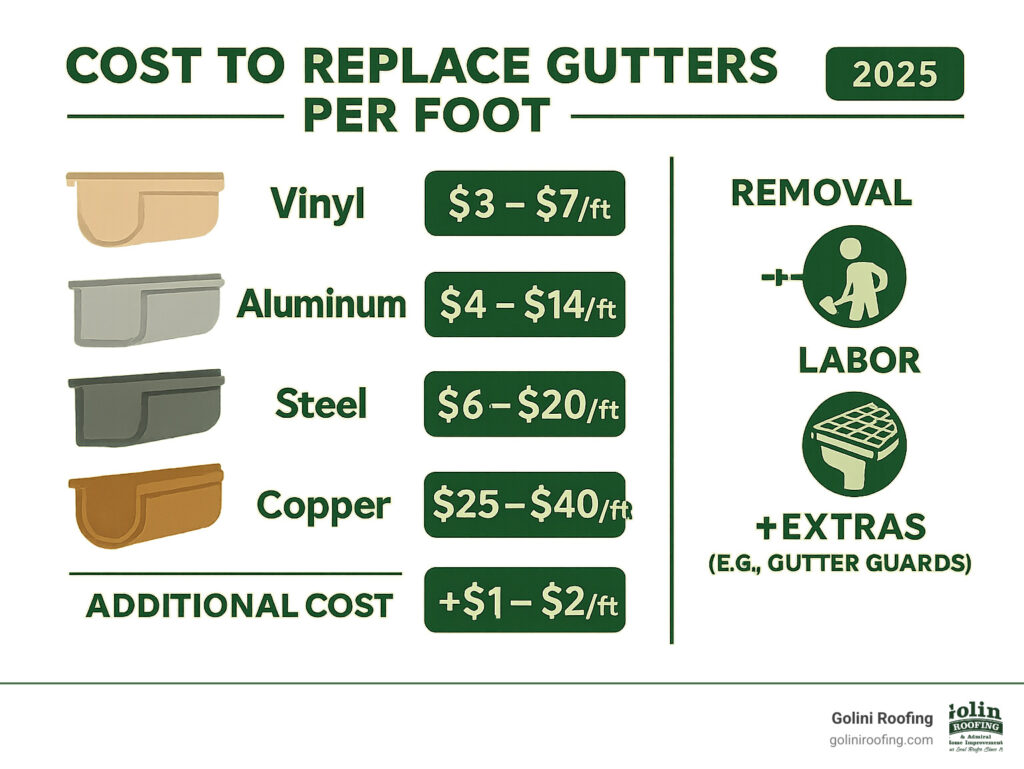
| Guard add-on (select runs) | Aluminum or stainless micro-mesh | $9–$18 per linear foot | Price varies with roof pitch and valleys |
| Buried downspout extension | Solid pipe to daylight or dry well | $350–$900 per run | Utility mark-out and restoration influence cost |
These ranges reflect what we see in the Capital Region, assuming standard colors and seamless aluminum. Copper, half-round profiles, or architectural requests land higher. The most common budget misses are fascia repair and access equipment.
A step-by-step quote comparison checklist
- Confirm total linear footage: Does each quote measure the same runs? Ask for a diagram if measurements differ by more than 10 percent.
- Identify gutter size and material: 5-inch vs 6-inch, aluminum thickness (0.027 vs 0.032), and color.
- List downspouts: Count, size, and location. Note any relocations for driveway splash or walkway icing.
- Check hanger type and spacing: Hidden screw hangers and spacing within 16–24 inches is our norm due to snow loads.
- Document fascia and soffit work: Replacement linear feet, wood type, primer/paint, and labor hours.
- Slope and layout plan: Ask how pitch will be set and verified. Clarify end cap sealing and outlet placement.
- Access plan: Ladders vs lift/scaffold. Where will equipment stage on tight city lots?
- Disposal and site protection: Haul-away, debris containment, and magnet sweep included?
- Weather plan: If winter install, how will cure times and safety be handled? Any weather reschedule policy?
- Warranty terms: Workmanship coverage, exclusions, transferability, and response times.
- Add-on options: Guard types, extensions, diverters. Price them line-by-line.
- Final number sanity check: Convert flat and custom quotes to an implied per-foot rate to see where differences come from.
Scenario breakdowns: how decisions change outcomes
Scenario 1: Lowest per-foot bid on a two-story with trees
The bid assumes 5-inch gutters, 2×3 downspouts, few hangers, and no fascia work. In a fall storm, the small downspouts clog, water overflows above a walk, and winter freeze creates ice at the front steps. The add-ons you declined now look necessary. The better choice would have priced 3×4 downspouts and guard on the upper run from the start.
Scenario 2: Flat-rate quote is higher but includes access
A flat rate includes one day of compact lift rental for a tight driveway in the city. The linear-foot quote looks cheaper until you add the lift and two extra crew hours. Once normalized, the prices are similar. The flat rate better reflected real conditions.
Scenario 3: Custom line-item quote on an older bungalow
The quote includes fascia sistering, drip-edge transition, and pitch correction. It reads longer and costs more. Three years later, the system still drains to daylight, and soffit paint is intact. The cost was in the prep, not the aluminum coil.
How quote clarity affects long-term satisfaction and property health
Clear quotes make it easier to maintain the system later. When the layout, hanger spacing, and pitch are documented, service techs know where stress points are. That reduces repeat leaks at corners and cuts down on uneven sagging under snow loads.
Clarity also protects fascia and foundation. We often see rot that started because a long run had no mid-span outlet and sagged under late-winter slush. A quote that assumed perfect straightness without specifying reinforcement didn’t fail on day one, but it set up problems for year three.
FAQs
Do I need a permit in Albany for gutter replacement?
Most replacements do not need a permit. Work in historic districts or any plan to bury extensions to storm lines can involve reviews. Ask each contractor to state in writing whether permits or mark-outs are included.
Is winter installation okay in the Capital Region?
Yes, in dry conditions with safe access. We account for slower sealant cure and careful ladder placement on snow. If a quote ignores winter factors, add time and cost risk to your comparison.
Are 6-inch gutters overkill for my home?
Not always. On steep roofs or large planes, especially with metal roofing, 6-inch with 3×4 downspouts handles summer downpours better. For small ranches with modest roof area, 5-inch is usually fine.
Why do per-foot prices vary so much?
Thickness of aluminum, hanger density, number of miters, and access plan drive differences. A cheap per-foot number that leaves out fascia work and disposal becomes more expensive after change orders.
Do I need gutter guards “near me” if I only have one tree?
Guards help most when second-story cleaning is difficult or when the tree type creates heavy seed or needle drop. One maple can justify guard on a specific upper run, while leaving lower runs open.
What about tying downspouts into drains?
Useful on lots with poor grading or clay soils. Clarify pipe type, outlet strategy, restoration of grass or pavers, and whether utility mark-out is included in the quote.
Bringing it all together: normalizing different quotes
When you receive multiple gutter installation quotes, convert each to the same comparison list: footage, size, downspout count and dimensions, hanger type and spacing, fascia work, access equipment, disposal, guard or extension options, warranty terms, and total. If any item reads “as needed,” ask for a unit price and a cap. That step alone removes most surprises on install day.
Conclusion
Comparing gutter proposals in Albany and the Capital Region is less about chasing the lowest per-foot number and more about aligning scope with your property’s specific conditions. Houses here span a century of building practices, our winters punish poor slopes, and tree cover varies street to street. When quotes make those realities visible, the numbers make sense. When they don’t, short-term savings usually trade for slow leaks, fascia damage, or winter icing where you walk. The most durable choice is the one that names the problem it’s solving and prices the work required to solve it.
