

Heat Cables for Gutters: Do They Really Stop Ice Dams and How They Affect Gutter Repair Costs
Albany winters bring snow, thaw, and refreeze. That mix creates ice dams. Water backs up at the cold edge of your roof and freezes. Gutters and downspouts fill with ice. Meltwater leaks into soffits and walls. Paint peels. Ceilings stain. Insulation gets wet. You pay for repairs and higher energy use.
Heat cables are sold as a simple fix. You plug them in and they melt channels for meltwater to drain. They can help in specific spots. They do not cure the cause of ice dams. You need clear expectations. You also need to compare the cost of cables against actual gutter and roof work. Start by understanding your gutter repair costs, then decide if cables are a smart bridge or a long-term plan. If you want an honest read on your home, talk with Oleg of United Gutters. He inspects, measures, and tells you what will work and what will waste money.
How Ice Dams Form in Albany Winters

Ice dams start with uneven roof temperatures. The roof deck above your heated rooms runs warm. The eaves stay cold. Snow over the warm sections melts during the day. Meltwater runs down to the cold overhangs. It refreezes at the edge. The ice ridge grows. Water pools behind it and finds a way under shingles.
Common local triggers include:
- Attic heat loss. Air leaks and low insulation raise deck temperature.
- Poor roof ventilation. Without steady airflow, the deck stays warm.
- Heavy lake-effect snow and sun breaks. Day melt, night refreeze.
- North-facing eaves and shaded valleys. Longer freeze windows.
- Clogged gutters. Meltwater has nowhere to go.
- Low gutter slope. Water stalls and freezes.
- Small or long downspouts with many elbows. Flow slows and freezes.
Albany and Upstate NY see swings around freezing. That is perfect for dams. Once ice locks a gutter, it loads your fascia. Hangers pull loose. Seams open. You now have water damage and a bent system when spring arrives.
What Are Heat Cables and How Do They Work?

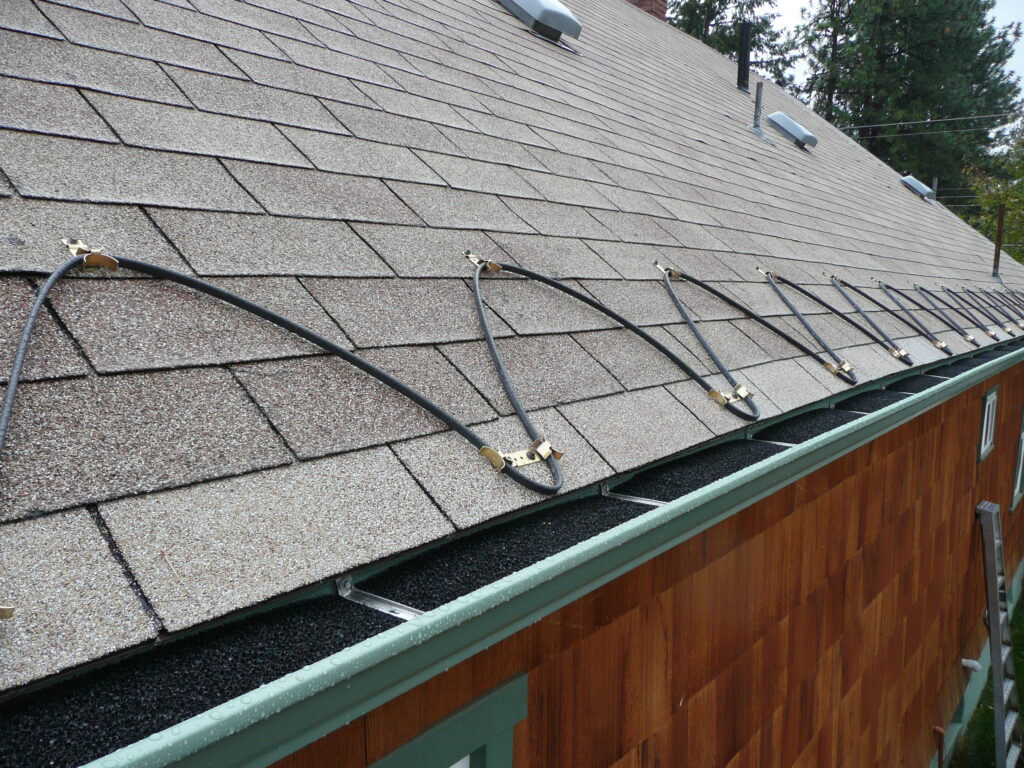
Heat cables are electric heating lines you lay on eaves, in gutters, and inside downspouts. They warm a narrow path so meltwater can move. Two main types exist:
- Self-regulating cables. They adjust heat output at colder spots. Typical rating is 5 to 10 watts per foot at 120V.
- Constant-watt cables. Fixed output. Often cheaper to buy. Less efficient in varying weather.
Installers often form a zigzag on the lower roof edge, then run the cable inside the gutter and downspout. A GFCI-protected circuit is required. Many owners pair cables with thermostats or timers. That reduces runtime and cost.
What heat cables do well:
- They melt channels through ice.
- They reduce roof edge refreeze where they touch.
- They buy time during long freeze-thaw cycles.
What they cannot do:
- They do not fix attic heat loss.
- They do not correct bad gutter slope or sizing.
- They do not stop leaks behind rotten fascia or poor flashing.
Pros and Cons of Heat Cables
Benefits
- Targeted control at the worst eaves, valleys, and downspouts.
- Lower upfront cost than roof or gutter replacement.
- Faster to deploy in mid-winter when repairs are hard.
- Work with many roof types when installed to specs.
Drawbacks
- Ongoing electric cost. You pay each day they run.
- Limited coverage. They help only where they are installed.
- Maintenance. You must check for damage and test GFCI.
- Shorter lifespan than new gutters. Plan for 5 to 10 years on quality cable.
- Fire and shock risk if used on damaged circuits or installed wrong.
Typical Costs
- Material. Quality self-regulating cable often runs 3 to 8 dollars per foot.
- Installed. 12 to 20 dollars per foot for typical layouts. Complex roofs cost more.
- Operation. At 8 watts per foot, 100 feet uses 0.8 kW. Run 8 hours a day at 0.20 dollars per kWh and pay about 1.28 dollars per day. Over 60 cold days, about 77 dollars. Double the length and cost doubles.
These are ballpark figures. Electric rates, cable output, and runtime vary.
Understanding gutter repair costs in Winter
Winter work costs more. Crews work slower in cold and on snow. Some tasks must wait for dry roofs. Know what can be done now and what should wait for spring.
What drives costs
- Extent of damage. One loose section is cheaper than a full reset.
- Access. Two-story ladders, steep roofs, and icy ground add time.
- Material. Aluminum K-style is standard. Copper and steel cost more.
- Hardware. Brackets, hangers, outlets, and leaf guards affect price.
- Hidden issues. Rot in fascia or soffit raises labor and material.
Use winter for assessment and urgent fixes. Plan larger projects for spring. Budget with a clear list. Compare the short-term spend on cables to long-term system work. That is how you control total gutter repair costs over the next few years.
Heat Cables vs. Physical Gutter Repairs
| Factor | Heat Cables | Physical Gutter Repairs |
|---|---|---|
| Primary goal | Keep a drainage path open during freeze | Restore flow, slope, sizing, and sealing |
| Upfront cost | Lower for small areas | Higher for full-system work |
| Operating cost | Yes, ongoing electricity | No ongoing utility cost |
| Seasonal timing | Can install mid-winter in many cases | Best in dry, warm weather |
| Lifespan | 5 to 10 years when installed well | 15 to 30 years for quality aluminum systems |
| Addresses root causes | No. Only manages symptoms | Yes. Corrects slope, leaks, sizing, and drainage |
| Risk if misused | Electrical hazards, roof damage if fastened wrong | Poor drainage if installed wrong |
Heat cables are a tool. Not a cure. Use them where they make sense. Do not use them as a substitute for a failed system.
Real Gutter Problems That Heat Cables Will Not Fix

- Clogs from leaves and grit. The cable will melt channels, but the debris will still block outlets.
- Improper slope. Standing water will freeze around the cable again.
- Undersized downspouts. A heated outlet will not solve a 2×3 spout that should be 3×4.
- Loose or failing hangers. Ice loads will pull a weak gutter loose.
- Rotten fascia. Screws will not hold in soft wood.
- Short drip edge or bad flashing. Water will run behind the gutter when snow melts.
- Insulation and ventilation gaps. Roof will keep melting snow and rebuilding dams.
Not sure what you are seeing on your home. Review the signs you need a gutter repair contractor. If several of those are present, address repairs before you invest in cables.
When Heat Cables Might Help
Good use cases include:
- Short north-facing eaves that always freeze first.
- Valleys that dump heavy meltwater on a cold gutter run.
- Long downspouts that freeze solid at elbows.
- Second-story dormers over unheated porches.
- Homes with sound gutters and fascia but recurring edge ice.
In these spots, cables can prevent mid-winter leaks. They can reduce weight on gutters. They can protect problem areas while you plan permanent fixes in spring.
Smart Alternatives: Insulation, Gutter Grading, Timed Heating
Air seal and insulate
- Seal attic air leaks around lights, ducts, and hatches.
- Increase attic insulation to current R-values for Upstate NY.
- Install baffles at eaves to keep soffit vents clear.
- Balance intake and ridge ventilation so the deck stays cold and even.
Correct gutter slope and sizing
- Set slope to about 1/16 to 1/8 inch per foot toward outlets.
- Use larger outlets and 3×4 downspouts on long runs.
- Add extra outlets on long eaves to reduce standing water.
Use controls with cables
- Install thermostats or moisture sensors to limit runtime.
- Use outdoor-rated timers for predictable schedules.
- Test GFCI monthly during the season.
Thinking about a full gutter reset or upgrade. Here is why a professional gutter installation service often saves money over a DIY attempt. Correct slope, proper hangers, and clean outlets prevent most winter headaches.
Maintenance Tips for Winter Gutter Performance
- Clean gutters before the first snow. Remove leaves, seed pods, and roof grit.
- Check outlets and splash guards. Make sure water can exit.
- Extend downspouts 4 to 6 feet away from the foundation.
- Secure all hangers. Replace missing spikes with hidden hangers and screws.
- Inspect fascia for soft spots. Fix rot before winter load arrives.
- Use a roof rake from the ground after big storms. Pull the lower 3 to 4 feet of snow off the eaves. Do not chip ice.
- If you have cables, switch them on before a thaw that follows a snowfall. Turn them off when the roof is dry and cold.
- Keep cords and connections off the ground. Use weatherproof boxes and GFCI.
Seasonal Budgeting: Balance Costs for the Best Outcome
You want a safe home and predictable costs. Split your plan into now, spring, and next winter.
Now, mid-winter
- Emergency melt path. Install limited heat cable on the worst eaves and downspouts.
- Critical repair. Rehang a short loose section or replace a crushed elbow if access is safe.
- Inspection. Document slope issues, fascia damage, and leak paths for spring work.
Spring
- System tune-up. Clean, reseal seams, reset slope, and add outlets.
- Right-size downspouts. Upgrade long runs to 3×4 with large outlets.
- Fascia and flashing. Replace rot and fix behind-gutter leaks.
Summer and fall
- Attic work. Air seal and insulate. Confirm soffit and ridge ventilation.
- Decide on cables for next season. Keep them as a backup, not a crutch.
Map each step to your budget. Plan your gutter repair costs across seasons. That reduces surprises and prevents repeat damage.
FAQ: Heat Cables, Installation, and Performance
Do heat cables stop ice dams?
They reduce the impact where installed. They melt channels for water to drain. They do not stop the roof from creating meltwater if insulation and ventilation are poor.
How long do heat cables last?
Quality self-regulating cables often last 5 to 10 years when installed and handled correctly. Constant-watt cables may have shorter life in harsh use.
How much do they cost to run?
At 8 watts per foot, 150 feet draws 1.2 kW. Run 8 hours a day at 0.20 dollars per kWh and pay about 1.92 dollars per day. Over 60 days, about 115 dollars. Real numbers depend on cable type, controls, and weather.
How long does installation take?
Small runs on one story can take 2 to 4 hours. Complex two-story layouts can take a day or more. Electrical supply and controls add time.
Can I DIY heat cables?
You can for simple runs and plug-in kits. Use GFCI, follow the manufacturer guide, and avoid staples or sharp bends. For hard-to-reach areas or hardwired setups, hire a pro.
Are heat cables safe?
Yes when installed to code and kept on GFCI. The risk comes from damaged cables, improper fasteners, or overloaded circuits. Inspect before each season.
Will cables damage shingles or gutters?
Not if you use approved clips and avoid penetrating the roof surface. Do not use metal staples. Do not cross or stack cables.
Where should I place cables?
Focus on the lower 2 to 3 feet of roof edge, inside the gutter channel, and down each downspout to the frost line or first elbow. Add coverage at problem valleys.
Do I need a thermostat or sensor?
They help. Thermostats or moisture sensors cut electric use and reduce wear. Timers are a low-cost control option.
What if I have leaf guards?
Some guards are compatible with cable clips. Others are not. You may need to run the cable above the guard or switch to a compatible guard.
Checklist: Decide if Heat Cables Are Worth It This Season
- My gutters are clean and hangers are secure.
- Fascia and soffits are solid. No rot.
- Only a few eaves, valleys, or downspouts cause leaks.
- I can supply a GFCI-protected outlet or circuit.
- I understand operating cost and will use a timer or thermostat.
- I plan insulation and ventilation upgrades in the next year.
- I have a spring plan for slope, outlets, and downspout sizing.
If you check most boxes, cables can help you bridge the winter. If you check few, put your budget into the system first.
Bottom Line: Heat Cables and Your Albany Home
Heat cables can help you get through freeze-thaw cycles. They are not a cure for ice dams. They are one tool in a full plan that includes clean gutters, correct slope, right-sized downspouts, solid fascia, and a cold, well-ventilated roof deck. Use cables where they return value. Put the rest of your money into permanent fixes. That approach lowers total gutter repair costs over time.
If you want a straight answer on your home, schedule a winter inspection with Oleg at United Gutters. He will identify root causes, map a step-by-step plan, and give you simple price options for this winter and next spring. Get clarity now. Protect your eaves, walls, and budget.
Next steps
For the full walkthrough, read Protect Your Home with Gutter Repair in Upstate NY — Oleg’s complete guide for Capital Region homeowners. Ready to book work? Request a free on-site estimate on our Gutter Repair service page, or call (518) 928-4954.
When you’re ready to have someone look at your own situation, our gutter installation in Albany, NY page walks through what to expect.
