

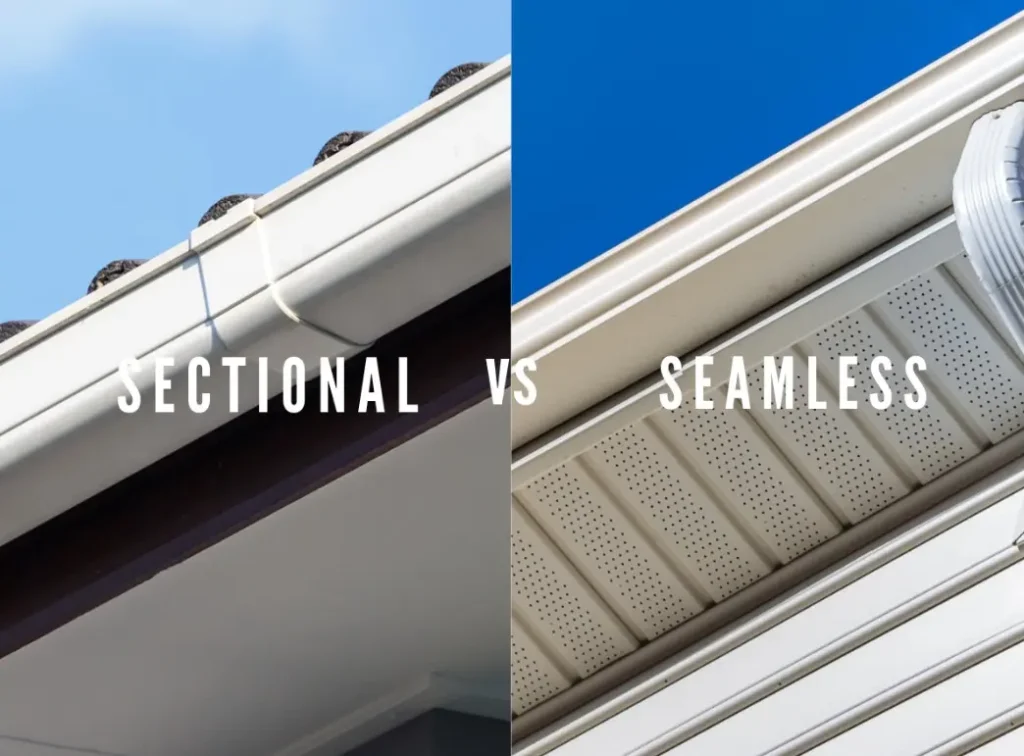
How to Decide Between Seamless vs Sectional Gutters
Summary
- Seams fail first on sectional gutters; in Albany they open up faster under freeze–thaw and ice load.
- Seamless reduces leak points, but corners and outlets still fail if hanger spacing and slope are wrong.
- Short runs and outbuildings can do fine with sectional; long runs and tree cover push toward seamless.
- Rotten fascia and undersized downspouts ruin both systems; material choice can’t overcome bad water paths.
- Choosing the cheaper option often shifts cost to fascia repair and foundation control later.
Introduction:
I work the Albany and Schenectady area. I spend most days looking at why gutters fail after a few winters and leaf cycles. I don’t judge by how a system looks on install day. I judge by how it moves water in a storm, in March thaw, and in that heavy October leaf drop. Here at United Gutters, we focus on how water actually behaves on your roofline and what your fascia can hold over time.
What usually fails on sectional gutters here
Sectional gutters come in pieces you assemble. Every seam is a future maintenance point. In this region, I see the same pattern:
- Seam caulk shrinks and cracks after two winters. Salt air isn’t the issue here. It’s freeze–thaw and UV.
- End caps and slip joints seep first, then drip, then pour in spring when ice pulls at the joints.
- Ferrules or light-duty hidden hangers pull out of softened fascia after long overflow.
- Downspout couplers loosen. When they twist, the outlet clogs faster with maple helicopters and oak strands.
- Pitch shifts. A small dip near a joint holds water. Then it holds ice. Then the joint opens more.
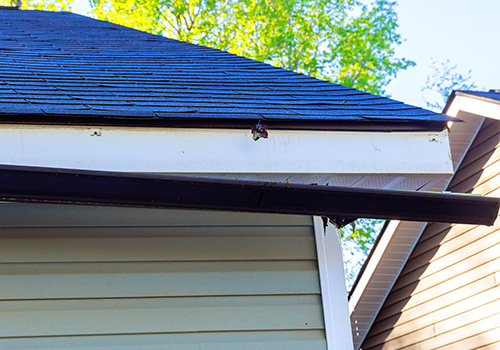
On older Albany stock with wood fascia that’s been painted a dozen times, I see rot start right behind the seam lines. Once water gets behind the gutter at a joint, it tracks along the backside and the soffit. You don’t see it from the yard. You find it when I push on the fascia and it’s soft.
What fails on seamless gutters
Seamless is not flawless. It’s one continuous piece per run, but corners and outlets are still seams. What I see:
- Miters and end caps leak if the installer lays thin sealant or sets a tight corner that moves with temperature swings.
- Hanger spacing too wide. Long runs sag under wet snow and ice. A 40-foot run needs tighter support in our winters.
- Outlets choke. A clean long trough still overflows if the outlet is undersized or the reducer is crimped poorly.
- Wrong size. A fast roof pitch with two valleys needs 6-inch K-style and 3×4 downspouts. Five-inch with 2×3 downspouts floods in spring.
Seamless reduces the number of failure points. It doesn’t remove the need for right sizing and support.
Local forces that drive the decision
Albany and the Capital Region aren’t gentle on gutters. I make choices by following these conditions:
- Freeze–thaw cycles: Water expands in seams at night, then thaws midday. Repeats for months. Sealants lose elasticity.
- Ice dams: Not a gutter problem at the root, but gutters hold ice at the edge. Weak joints spread. Hangers pull.
- Spring runoff: Valleys dump fast. Undersized outlets can’t keep up. Overflow shows up at driveway corners and over entry steps.
- Heavy fall leaf drop: Even with guards, fine debris chokes outlets. Joints catch debris; seams act like shelves.
- Older fascia: Many homes have patched or layered fascia. Screws don’t always bite well. Any overflow becomes hidden rot.
Where seamless makes the most difference
In my experience, the longer the run, the more seamless pays off. Straight 30–60 foot stretches on the back of a colonial or a ranch are common here. Every joint you remove is one less leak line. On valleys that hit that run hard, fewer seams means fewer places for debris to snag.
Seamless also helps with aesthetics, but I don’t make decisions for looks. I make them for water path. The water doesn’t care about grain or color. It cares about slope, outlet size, and obstruction. If you’re planning gutter installation in albany ny on a long rear run under heavy trees, I lean seamless with 6-inch trough and large downspouts. I’ve watched too many five-inch sectionals flood patios in May.
When sectional is fine
I still choose sectional in a few cases:
- Short runs under 15 feet, like over a small porch roof.
- Detached garage or shed where foundation risk is low.
- Temporary fix ahead of siding or roof replacement in a year or two.
- Complex bay windows with small returns where cutting one-piece seamless is more trouble than it’s worth.
If the budget is tight and the run is short, sectional can buy time. Just expect to re-seal seams on a cycle or replace earlier.
What the first five years usually look like
Sectional:  Year 1: looks fine  →  Year 2: hairline seep at seams  →  Year 3–4: spring overflow at joints  →  Year 5: fascia soft spots
Seamless:   Year 1: fine  →  Year 2–3: corners/outlets need touch-up  →  Year 4–5: watch hanger lines after heavy ice
That’s what I see across Albany, not a promise. Maintenance and tree cover push these lines around.
Seamless vs sectional: what you trade
| Factor | Seamless | Sectional |
|---|---|---|
| Leak points | Fewer, limited to corners/outlets | Every joint is a risk under freeze–thaw |
| Upfront cost | Higher | Lower |
| Common Albany failure | Hanger spacing, miter leaks | Seam separation, pitch shifts |
| Best run length | Medium to long straight runs | Short runs and small add-ons |
| Maintenance cycle | Spot checks at corners/outlets | Periodic re-seal at multiple joints |
| Winter behavior | Holds ice but fewer leak lines | Ice opens seams faster |
| Repairability | Piece repairs are limited; corners/outlets | Any single section can be swapped |
| Sensitivity to installer | High: slope and hanger layout are critical | Medium: joints dominate outcomes |
Your walk-around evaluation checklist
This is how I assess a house from the ground and a ladder. It’s evaluation, not a how-to fix.
- Look for dirt lines at seams or under miters. Dirt tracks mark seepage paths.
- Check for paint peel or ripples on fascia under joints. That’s hidden moisture.
- Stand under valleys and look at the ground. Washed mulch or gravel means overflow at peak storms.
- Find dips. Sight the gutter from the end. Any belly holds water, then ice.
- Check downspout size. If it narrows above the first elbow, spring will overwhelm it.
- Look at snow slide zones. Metal roofs dump hard. Hangers need to be closer there.
- Note tree type. Oaks drop strings and caps late. Maples shed helicopters that clog outlets.
- Find the discharge path. If water exits near foundation low points, you’re risking the basement.
What happens when you choose one or the other
If you choose sectional to save now
- Year 2–3, you’re usually resealing at least a couple joints.
- Overflow near entries can create ice sheets on walkways in January.
- Hidden fascia rot adds cost when you finally replace, because hangers won’t hold.
- Foundation wash at corners shows up in one or two heavy springs.
If you choose seamless and size it right
- Fewer visible issues for the first few years.
- Corner maintenance becomes the main task. Outlets still need cleaning.
- Hanger layout matters. If spacing is wide, sags show after heavy snow years.
- Downspouts remain the choke point. Large outlets carry you through the shoulder seasons.
Overflow and basement risk tend to rise when gutter cleaning stops. I’ve written about what I see when gutters start pouring. You can read that here: gutter cleaning Albany NY overflowing gutters.
Seam choice matters less than water path
Seamless vs sectional is only one decision. I pay more attention to water volume and where it goes.
- Size: Many Albany roofs with steep pitch need 6-inch K-style, not 5-inch.
- Outlets: Big outlets with 3×4 downspouts move spring volume.
- Drops: Keep drops close to valleys. Long flat runs to a single outlet flood.
- Splash zones: Discharge to daylight, not into a basement window well or walkway.
Timing also matters. Leaf drop stacks up fast. If you’re trying to time work, I laid out what I watch each fall: fall gutters when to book gutter repair near me.
Material and thickness in our market
Most homeowners here go with aluminum. In my experience, 0.032 aluminum holds up better under ice load than thinner stock. Sectional kits from a big box are often lighter. On long runs, that makes the hangers carry more of the load and sag sooner. Steel is strong but can rust at cuts and seams, especially around salted splash zones along driveways. Copper is fine but not common in typical Albany neighborhoods. The seam choice doesn’t change winter physics. Thickness and hanger layout do.
Gutter guards and seams
Guards help with leaves. They don’t fix undersized outlets or poor slope. On sectionals, I see guards trap debris at seams if the panel overhang is tight. On seamless, guards tend to do better because debris doesn’t snag at middle joints, but corners still need attention. If you expect guards to remove maintenance, you’ll get overflow at the first spring thaw after a heavy winter. I plan guards around the worst valley dumps and make sure the outlet stays accessible.
Corner and valley behavior in winter
Corners collect ice. Valleys dump into those corners. If the miter isn’t sealed well, it weeps down the fascia for months. Sectional or seamless, that’s the same story. The difference is how many other seams you have to chase at the same time. With seamless, you’re mostly watching the corners and the outlets. With sectional, you’re watching every joint along the run, plus the corners.
Thinking in budget cycles
I don’t tell people to spend more for the sake of it. I match the system to the budget horizon.
- One to three years: Sectional can be fine for a porch, shed, or a temporary fix before roof or siding work.
- Five to ten years: Seamless tends to carry fewer problems across our winters, if sized and supported right.
- Unknown horizon: I prioritize downspout sizing and discharge paths first, then seam choice.
If you’re weighing gutter installation in albany ny during a roof replacement, I set the gutter spec to the roof pitch and valley layout. Getting the size and drop locations right matters more than choosing seamless vs sectional in isolation.
Signs you should not reuse existing sectional
- Multiple seam patches with dirt tracks down the fascia.
- Visible belly between hangers longer than a few feet.
- Downspouts crimped into reducers with old tape or mastic.
- Soft fascia behind joints. If my awl goes in easily, hangers won’t hold.
These are the jobs where seamless replacement with new fascia repairs stops the cycle of patching.
Where I still spec sectional on purpose
- Short bay windows with complex returns where a clean cut on seamless leaves waste and time.
- Detached structures with low foundation risk and minimal tree cover.
- Interim solutions when upstream roof heat loss is causing ice dams, and the attic work isn’t scheduled yet.
In those cases, I keep the sections short and the outlets large. I accept the reseal cycle.
Foundation and basement consequences
This region has many basements. Poor discharge is the quiet problem. Whether you choose seamless or sectional, if the downspout dumps near a low-grade corner, the water finds your block wall. I look for staining on the foundation, washed-out mulch, and damp corners inside after rain. Seam decisions don’t fix grading or outlet placement. You pick the seam approach, but you win or lose on outlet size and where that water ends up.
Three quick scenarios I see often
- Long rear run, big maple overhang, steep roof: Seamless 6-inch with 3×4 downspouts. Sections here clog at mid-seams and overflow into the patio.
- Short porch roof, detached garage: Sectional is fine, especially if you’re redoing siding next year.
- Split-level with two valleys hitting the same corner: Seamless helps, but the real move is dual downspouts or a diverter and a big outlet. Otherwise, you still overflow.
FAQ
Will seamless gutters stop ice dams?
No. Ice dams come from roof heat loss and snow load. Seamless only reduces mid-run leaks. You still get ice at the edge if attic insulation and ventilation are off.
Do seamless gutters last longer here?
Usually, yes, because there are fewer joints to fail. Corners and outlets still need care. Hanger spacing is the make-or-break under snow.
Is 5-inch ever enough in Albany?
Sometimes on small, low-slope roofs with light tree cover. Once you add steep pitch, valleys, or long runs, I move to 6-inch.
Can I mix seamless and sectional?
Yes. I often do seamless on the long faces and sectional on short returns or porch covers. Water doesn’t care if you mix, as long as outlets and slope work.
If I install guards, can I go smaller?
No. Guards don’t increase outlet size. They reduce large debris. Spring melt still overwhelms small outlets.
How often should corners be checked?
After the first winter, then after heavy fall leaf drop. Corners show issues first.
Bottom line on the decision
Seamless cuts leak points on long runs and carries better through our winters. Sectional is workable on short spans and outbuildings, or as a short-term choice. Neither choice survives bad sizing, poor hanger layout, or weak outlet paths. If you’re mapping out gutter installation in albany ny, frame the decision around run length, roof pitch, valley dumps, and where the water can safely leave the property.
At United Gutters, decisions are made by following the water, not patching symptoms. Delay usually shifts cost from the gutter line to fascia repair and basement control. Moving to the right size and the right outlet plan fixes more problems than the seam choice alone. That’s how I see it on Capital Region homes after many winters. No promises, just patterns I keep running into.
