

How much do gutters affect home value in Clifton Park, NY?
Summary
- Unclogged, properly sized gutters reduce inspector write-ups and buyer credits.
- Cleaning and small repairs often outperform full replacement right before a sale.
- Leaf loads, ice, and spring runoff in Upstate NY shape what matters to buyers.
- Neighborhood expectations set the bar for curb appeal and drainage standards.
- Spending stops making sense when price point or HOA rules cap your upside.
Introduction
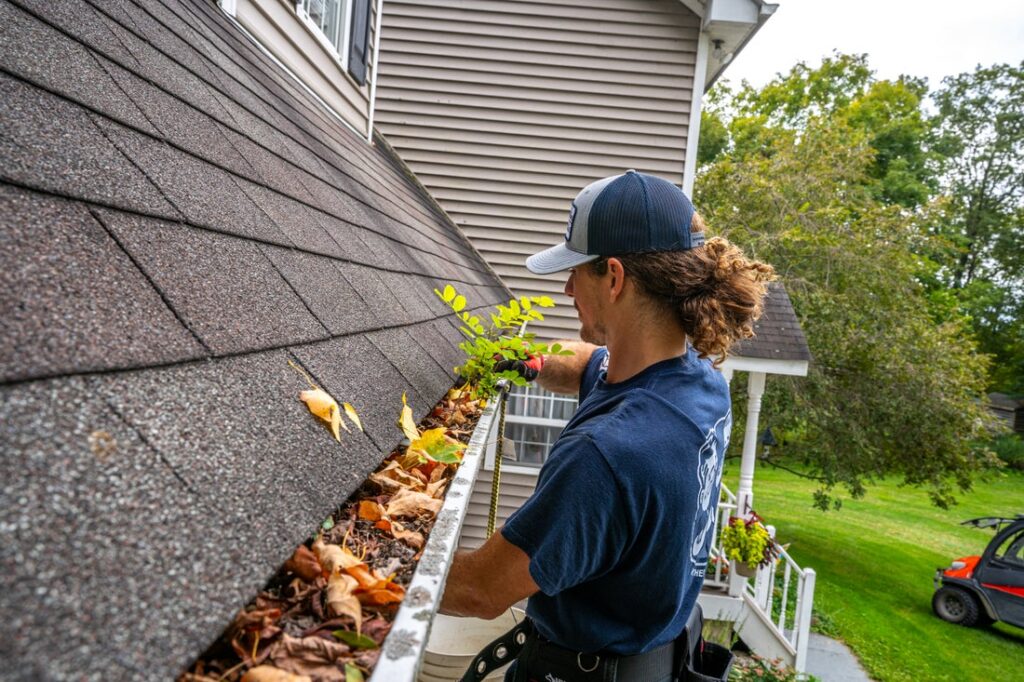
We service gutters across Clifton Park and the broader Capital Region. When sellers ask how much gutters affect home value, we translate the question into local outcomes: fewer inspection flags, fewer buyer credits, cleaner listing photos, and less water where it doesn’t belong. Value here often shows up as time on market and negotiation leverage, not just an appraiser’s line item.
Clifton Park sits in a four-season, tree-heavy environment between Albany and Saratoga. Country Knolls, neighborhoods near Clifton Park Center, and homes along the Halfmoon line each have different leaf loads, rooflines, and buyer expectations. In our experience, properly functioning gutters rarely “wow” buyers, but failing gutters give them reasons to push for price reductions.
Why gutters matter for value in Clifton Park and the Capital Region
- Foundation and grading: Spring melt and rain saturate soils along basements and crawlspaces. Gutters that discharge at the foundation translate to damp corners, sump pumps cycling, and sometimes hairline cracks migrating.
- Ice risk management: Freeze–thaw cycles load roof edges with ice. Undersized or clogged systems encourage ice dams that stain soffits, back up under shingles, and lead to fascia rot.
- Yard and hardscape: Mulch washouts, paver settling near downspouts, and driveway heave next to chronic downspout discharge all show up in buyer walk-arounds.
- Inspector habits: Capital Region inspectors routinely photo clogged outlets, short downspouts, and negative slope. These notes convert into buyer credits more often than most sellers expect.
Common misconceptions that hurt sale outcomes
“Gutters don’t add value”
We rarely see gutters add a headline dollar bump. We often see bad gutters cost sellers. The value is in removing objections: no staining at soffits, no puddling by the stoop, no peeling fascia at the back deck.
Luxury bias: “Only a full replacement counts”
Full replacement can make sense on tired, leaking systems. But in many pre-listing cases, cleaning, resealing inside corners, rehanging for slope, and extending downspouts resolve the exact items inspectors write up. That’s usually enough to avoid credits.
“Buyers won’t notice drainage”
They do. In heavy fall rain, buyers see sheets of water skipping over clogged gutters. In spring, they see muddy edges and warped mulch. They ask where the water goes in snowmelt. We hear it at open houses and post-inspection calls.
Overconfidence in a “pass”
Inspectors don’t pass or fail houses. They note conditions. Clogged or undersized systems often appear as a safety or maintenance item. Once it’s on paper, buyers in this market typically ask for a credit, a reinspection after service, or a price concession.
Seasonal and regional realities in Upstate NY
- Leaf drop timing: Maples and oaks drop late October into November. Pine needles shed year-round. Homes near Country Knolls see mixed loads that clog outlets fast.
- Freeze–thaw and ice dams: Temperatures swing above and below freezing in December–February. Ice backs up at eaves where gutters are clogged or shallow.
- Snow load: Heavy bands off the lakes push weight onto gutter brackets. Loose spikes or undersized hangers show themselves then.
- Spring runoff: March–May brings saturated soils. Short downspouts create pooling near basement windows and bilco doors.
Budget decisions that actually change outcomes here
| Option | Typical local cost | Timeline | Inspection/buyer impact | Usually worth it when… | Often not worth it when… |
|---|---|---|---|---|---|
| Routine cleaning | $175–$350 for most single-family; more with 3rd-story or steep roofs | 1–2 hours | Removes most write-ups for clogs and overflow | Listing in fall or spring; visible overflow streaking | Already replaced recently; guards performing well |
| Minor repairs (reseal, rehanging, pitch) | $150–$600 depending on length and access | 1–4 hours | Addresses leaks at corners and sag points inspectors flag | Drips at inside corners; dips over long runs | System is warped, undersized, or heavily damaged |
| Downspout extensions, diverters, splash blocks | $25–$45 DIY; $75–$200 installed per location | Same day | Reduces notes about water near foundation and grading | Pooling by stoops, garage corners, or window wells | Drain line already installed and functioning well |
| Gutter guards (matched to debris type) | $7–$14/ft installed; $1,000–$2,800 typical | Half day to a day | Minimizes near-term clogs; inspectors still check for correct fit | Heavy maples or pines; owner staying through multiple seasons | Immediate sale; low tree cover; aging gutters due for replacement soon |
| Full replacement (5″ or 6″ aluminum) | $10–$20/ft installed; $2,200–$6,500 typical depending on size | 1 day for most homes | Removes chronic issues; improves curb appeal if colors match | System is failing, undersized, or mismatched; mid-to-upper price points | Entry-level listing where buyers expect to do projects |
Guard tradeoffs for Clifton Park trees
- Maples/oaks: Fine-mesh screens work, but corner maintenance remains. Guards reduce late-fall clogs that lead to ice dams.
- Pines: Micro-mesh helps with needles, but valleys and miters still need seasonal checks.
- Mixed canopy: We recommend guards only when owners expect to keep the home through a few cycles; for quick sales, cleaning is usually enough.
Neutral curb appeal gains
Fresh, color-matched gutters and straight downspouts read as maintained. It rarely raises price, but it supports first impressions in neighborhoods where listings compete photo-to-photo.
Soffit/fascia interactions
We find hidden fascia rot where gutters have leaked for years. Replacing small sections before listing reduces inspection surprises. In our experience, catching it early keeps buyers from opening the scope to full soffit repair.
Curb appeal limits and opportunities in a four-season market
- What photos show: Straight lines, clean outlets, and matched colors. No streaks on aluminum. No algae trails below corners.
- What photos hide: Drip at miters during rain, short downspouts, grading dips, and overflow at inside valleys.
- Open-house reality: Visitors look at deck edges, garage corners, and the walk from driveway to front door. If they see puddles or splash-back dirt, they assume more water issues.
Local field story: a Clifton Park visit
I visited a split-level in Country Knolls, moderate roof pitch with a long rear run and mature oaks along the back fence. The seller was listing in late October. The issue was classic: a sagging 40-foot rear gutter, leaking inside corner at the slider, and downspouts discharging right at the patio slab. We cleaned the system, rehung 18 feet to restore pitch, resealed two miters, and added 10-foot extensions with splash blocks aimed toward the grass swale. The next rain showed no drip at the slider and no puddling at the stoop. The inspector’s report noted recent service and had no moisture findings inside. The agent told us buyers didn’t ask for a gutter credit, and the listing photos showed a dry patio after rain. Modest fixes, measurable impact.
How inspectors and buyers in the Capital Region treat gutters
- Inspectors often include photos of clogs, short extensions, and negative slope with a recommendation for service or repair.
- Common buyer credit requests: cleaning voucher; $300–$800 for minor repairs; downspout extension at 3–4 locations; rarely full replacement unless damage is obvious.
- Reinspections: If you address noted items quickly and provide an invoice, reinspections tend to be clean and keep the deal moving.
When pre-sale gutter spending stops making sense
- Price point caps: At entry-level price points, buyers expect some projects. Cleaning and safety fixes are usually enough.
- Short hold: If you’re 30–60 days from listing, routine cleaning, downspout extensions, and sealing one or two corners often beat bigger installs.
- HOA/townhome rules: Some Clifton Park HOAs require color and style matches or prohibit exterior changes without approval. That can delay replacements past your list date.
Evaluating cost vs. return in Clifton Park
In our experience, the return shows up as avoiding deductions. A $250 cleaning paired with $200 in extensions can prevent a $1,000 credit ask. A $2,800 replacement may not return dollar-for-dollar right before listing unless the old system was clearly failing or mismatched in a neighborhood where buyers expect clean lines.
Neighborhood context matters. In Country Knolls, straight 5-inch aluminum with matched downspouts is baseline. Near Clifton Park Center, smaller lots with fewer trees can get by with clean, functioning 5-inch systems and longer extensions at driveway corners. Along the Halfmoon line, many newer builds benefit from 6-inch gutters and extra downspouts on large roof planes; buyers notice undersizing there.
Scenario breakdown: three seller profiles
Selling within 60 days in leaf season (Oct–Nov)
- Actions: Cleaning, reseal corners, rehang dips, extend downspouts 10 feet where grading is flat.
- Why it works: Prevents overflow streaks and ice-attracting debris right before showings.
- Expected impact: Fewer photo issues and fewer inspector notes.
Listing mid-winter with ice concerns
- Actions: Clear outlets, ensure hangers hold, consider ice belts if gutters are secondary to insulation/venting issues.
- Why it works: Reduces water backing under shingles and soffit staining that alarms buyers.
- Expected impact: Less negotiation over ice dam history; fewer emergency service requests from buyers.
Listing in spring with wet yard and soil saturation
- Actions: Long downspout extensions, splash blocks, and diverters aimed toward swales; confirm positive slope away from foundation.
- Why it works: Keeps basements dry during showings and reinspections.
- Expected impact: Reduced buyer concern about drainage and sump pump activity.
DIY maintenance and decor swaps that help vs. hurt
- Help: Safe ground-level tasks like attaching downspout elbows, adding splash blocks, and checking that extensions stay connected after mowing.
- Help: Touch-up paint on scuffed downspouts and replacing crushed elbows from snowblower bumps.
- Hurt: Unstable ladder work on icy driveways, over-tightening spikes that crush aluminum, and installing guards over warped gutters.
- Hurt: Decorative rain chains where capacity is needed; they often splash siding and stain concrete in heavy rain.
Pre-listing gutter checklist for Clifton Park homeowners
- Walk the perimeter after a rain. Note any drip at corners, streaks, or puddles at stoops.
- Confirm downspout length. Aim for 6–10 feet of discharge away from the foundation or to a working drain line.
- Schedule a cleaning if leaves or needles are visible in outlets, valleys, or leaders.
- Ask for a quick slope check on long runs. Rehang dips that trap water.
- Seal or replace leaking inside/outside miters, especially over doors, decks, and sliders.
- Inspect fascia behind chronic leaks for softness. Replace small sections before it becomes an inspection section.
- Color check. Replace obviously mismatched or dented downspouts visible in listing photos.
- Revisit in two weeks if you listed during leaf drop or a thaw–freeze cycle.
How gutter condition affects time on market and negotiations
- Time on market: Overflow and visible staining often push buyers to wait for a drier listing, especially when similar homes are available.
- Pricing leverage: Clean inspection notes keep list price intact. Water concerns are a common reason for second-round price talks.
- Negotiation behavior: Locally we see buyers request credits for cleaning, extensions, and leak fixes. Insurance questions sometimes arise if ice dams are documented.
Frequently asked questions
How much does a cleaning matter compared to guards right before I list?
For a near-term sale, a thorough cleaning plus simple extensions and minor sealing usually covers the inspection items. Guards make more sense if you plan to own the home through a few seasons with heavy debris.
Do I need 6-inch gutters in Clifton Park?
We recommend 6-inch on large roof planes, long valleys, or newer builds near the Halfmoon line where rain volumes shed quickly. For many traditional colonials and splits, properly pitched 5-inch with adequate downspouts performs well.
Will a full replacement increase my appraisal?
Appraisals rarely break out gutters as direct value. Replacements can support overall condition and reduce negative adjustments if the old system was failing or visibly damaged.
Is professional gutter cleaning in Clifton Park, New York different from elsewhere?
The work looks similar, but timing and priorities shift with oak and pine loads, freeze–thaw windows, and spring saturation. We schedule cleanings to get ahead of those cycles so inspection and showing periods stay clean.
Conclusion
In Clifton Park and the Capital Region, gutters influence value by removing reasons for buyers to hesitate. We see the biggest gains in quiet outcomes: dry patios in photos, clean inspection notes, and no credits for puddling at the foundation. The right spend depends on timing, neighborhood expectations, and the actual condition of the system. Cleaning and small fixes often carry the day. Replacements make sense when the system is truly at the end of its life or out of step with what nearby homes consider standard.
